Vey - Designing independent eating for transradial amputees through adaptive behavior and assistive form
THE BRIEFDesigning an assistive eating device that supports transradial amputees through independent use, adaptive behavior, and culturally relevant design.
VEY explored how assistive products could move beyond prosthetic mimicry by focusing on autonomy in one of the most repetitive and meaningful daily rituals: eating. Through user interviews, behavioral simulations, and contextual analysis, the project reframed assistance around simplicity rather than replacement.
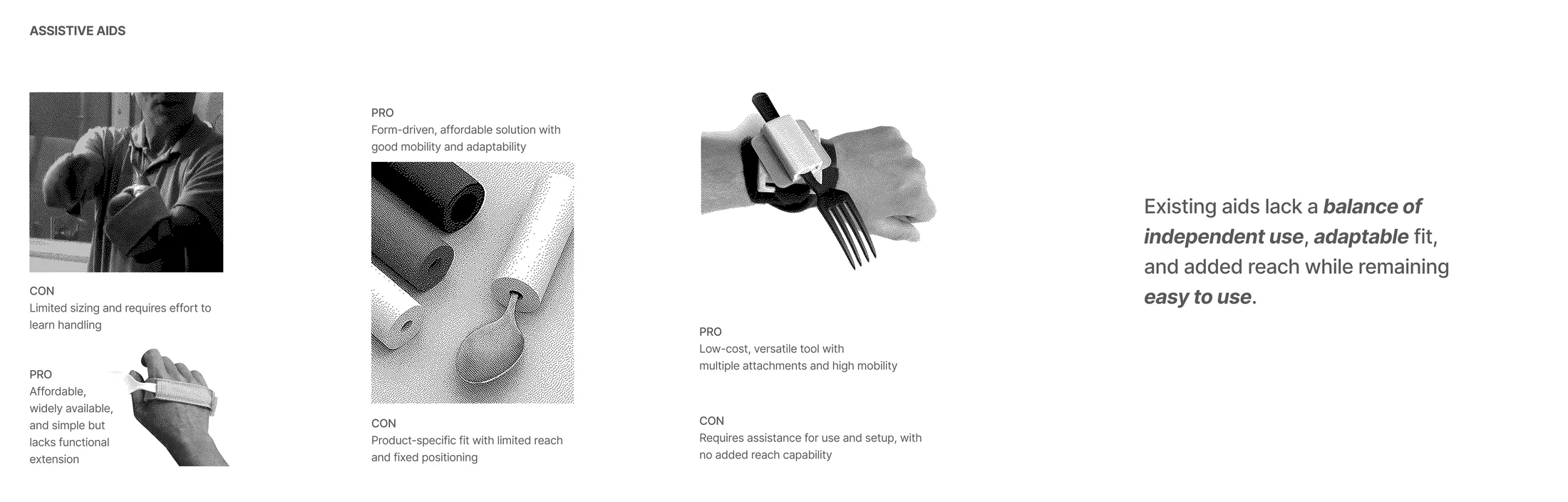
Many users adapted around prosthetics before relying on them
Research revealed that many transradial amputees did not consistently rely on prosthetics for daily tasks due to discomfort, maintenance, or emotional disconnect. Instead, many developed personalized adaptive methods rooted in bodily memory and practical necessity.
This shifted the project from designing for replacement toward designing for practical, everyday autonomy.
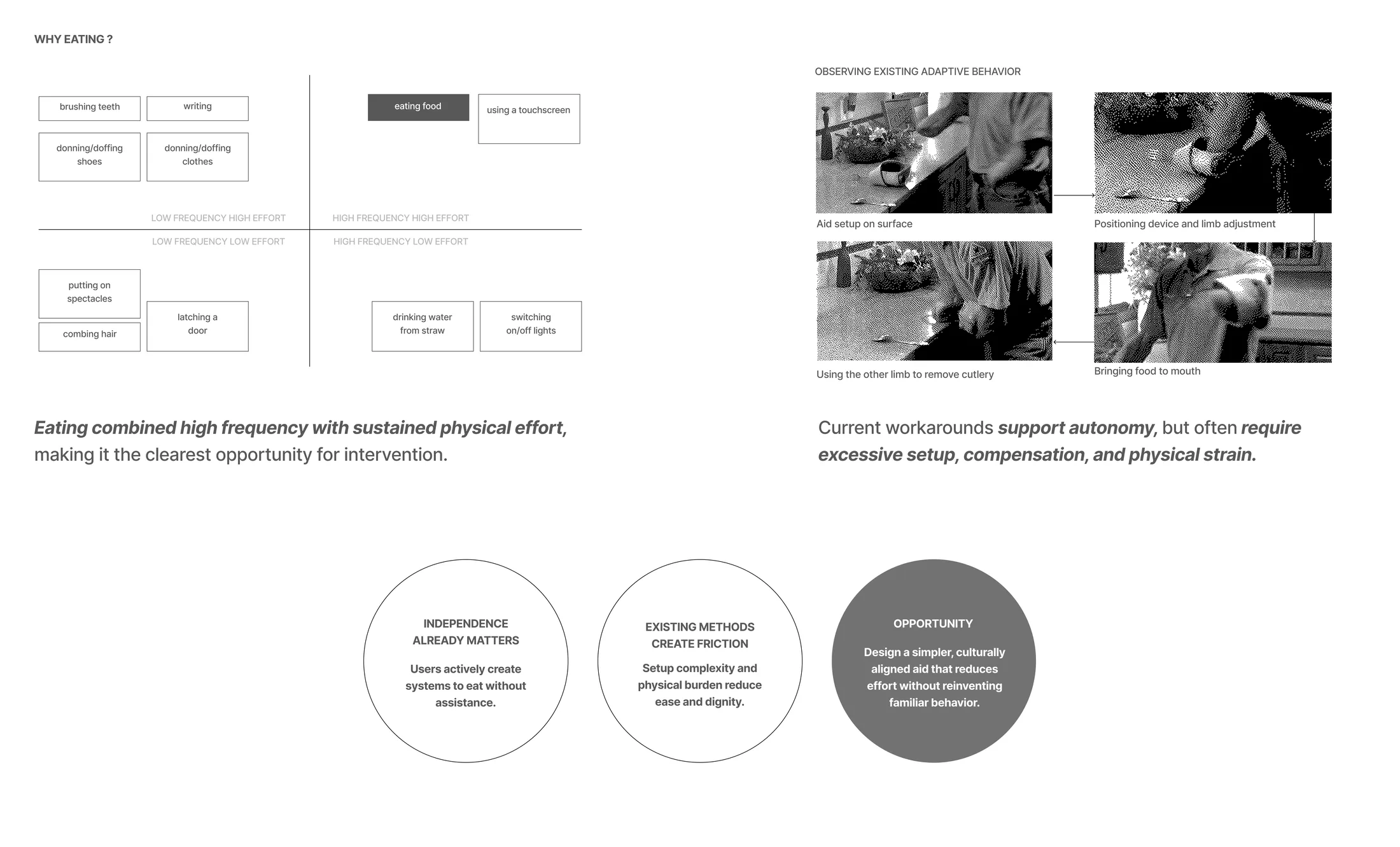
Why eating became the most meaningful intervention point
Among multiple daily activities, eating emerged as uniquely repetitive, culturally important, and physically demanding. It combined practical necessity with personal dignity making it a meaningful opportunity for assistive independence.
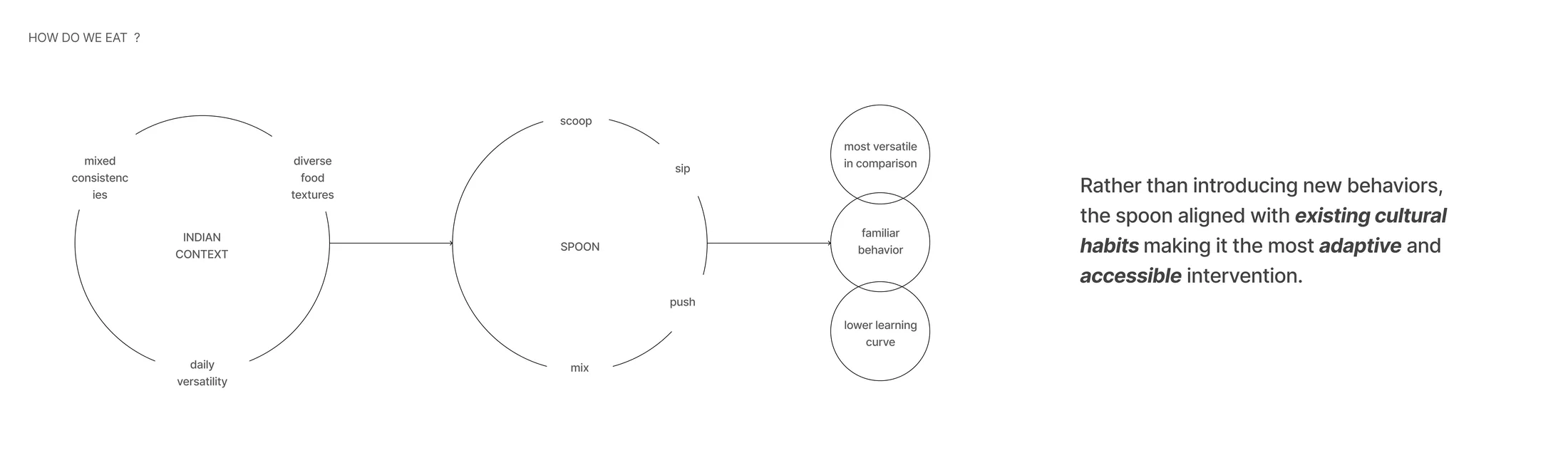
Why the spoon proved most versatile
Rather than assuming universal eating patterns, the project specifically examined the Indian context, where spoons support diverse motions across textures, consistencies, and food rituals. Across scoop, sip, push, and mixed-use behaviors, the spoon proved the most adaptive intervention.
Simulating limb absence revealed adaptive intelligence
Roleplay simulations demonstrated how people instinctively use surfaces, pressure, posture, and alternative body parts to create leverage. These observations reframed design away from prosthetic imitation and toward supporting adaptive behavior.
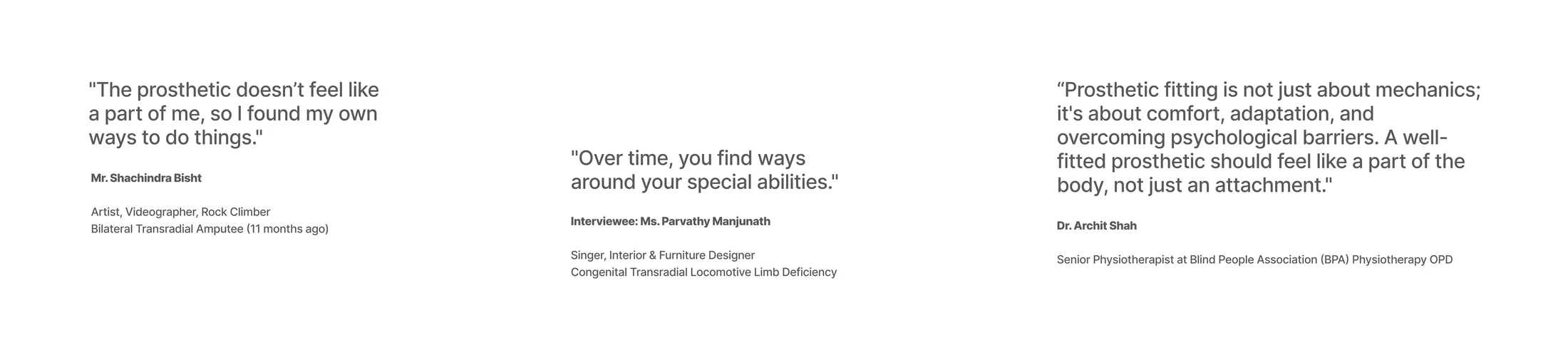
Designing from lived experience, not assumption
User interviews consistently emphasized emotional comfort, adaptation, and task-specific independence over prosthetic perfection. Existing workarounds often revealed more about real needs than existing products did.
Translating behavior into assistive form
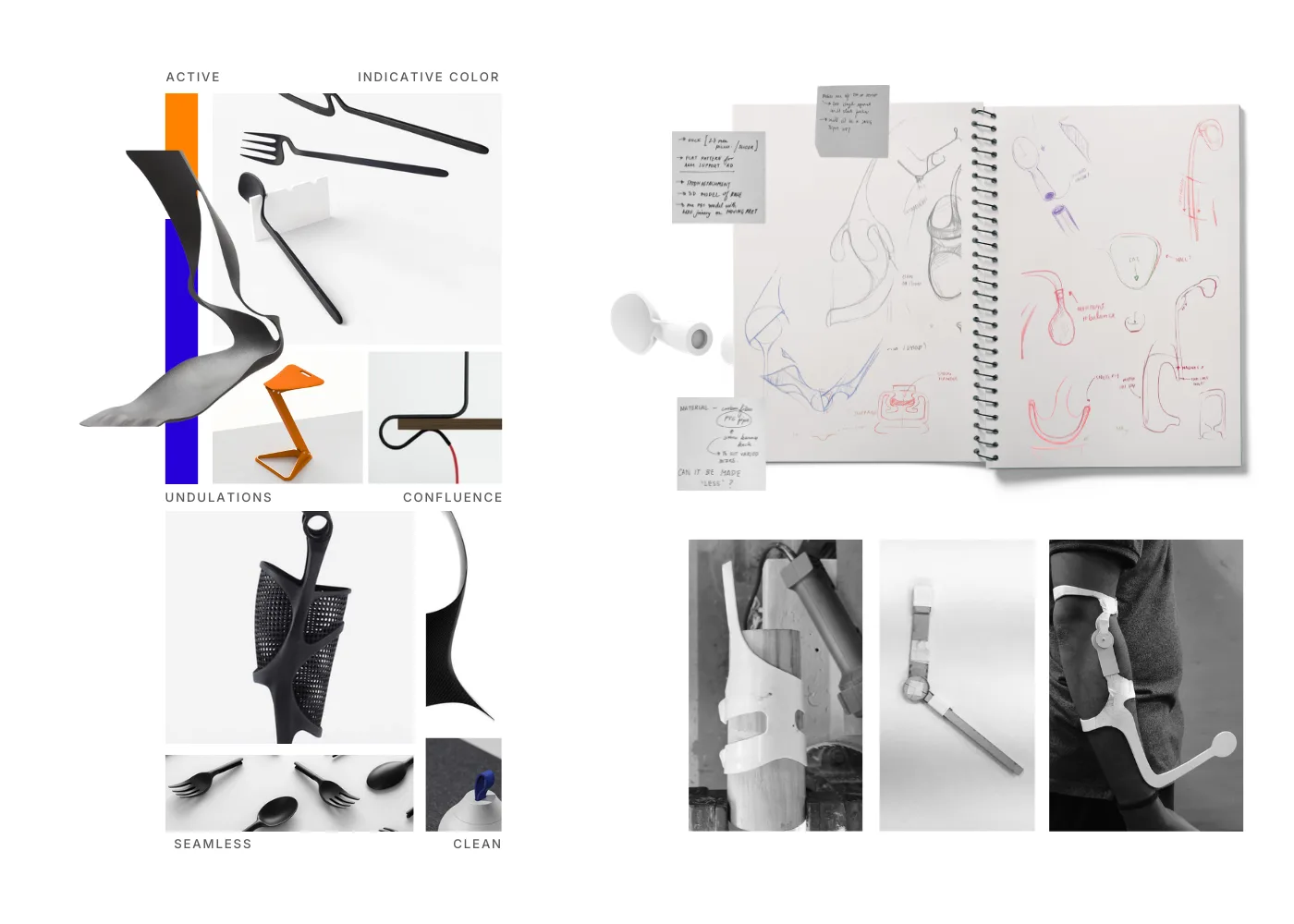
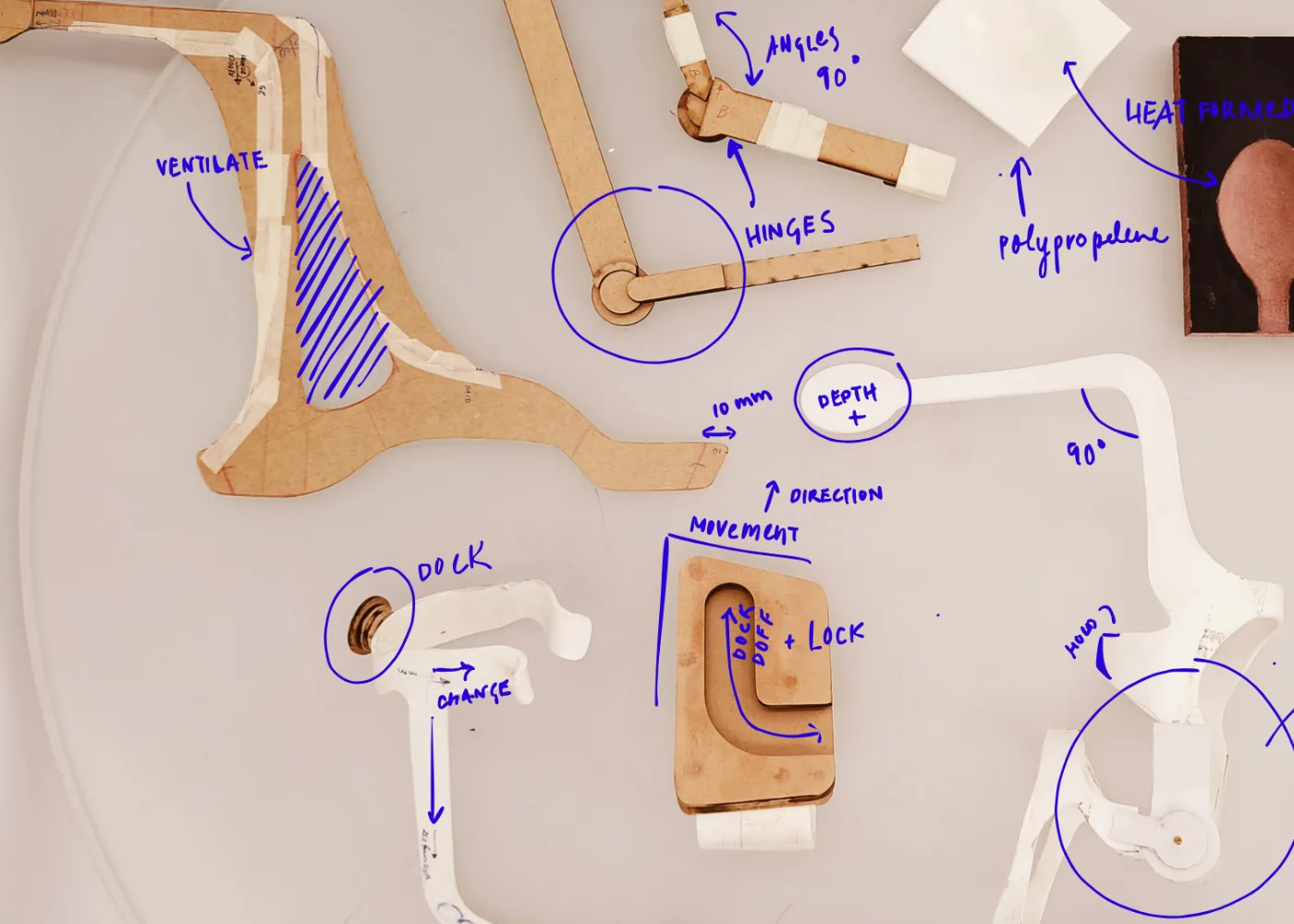
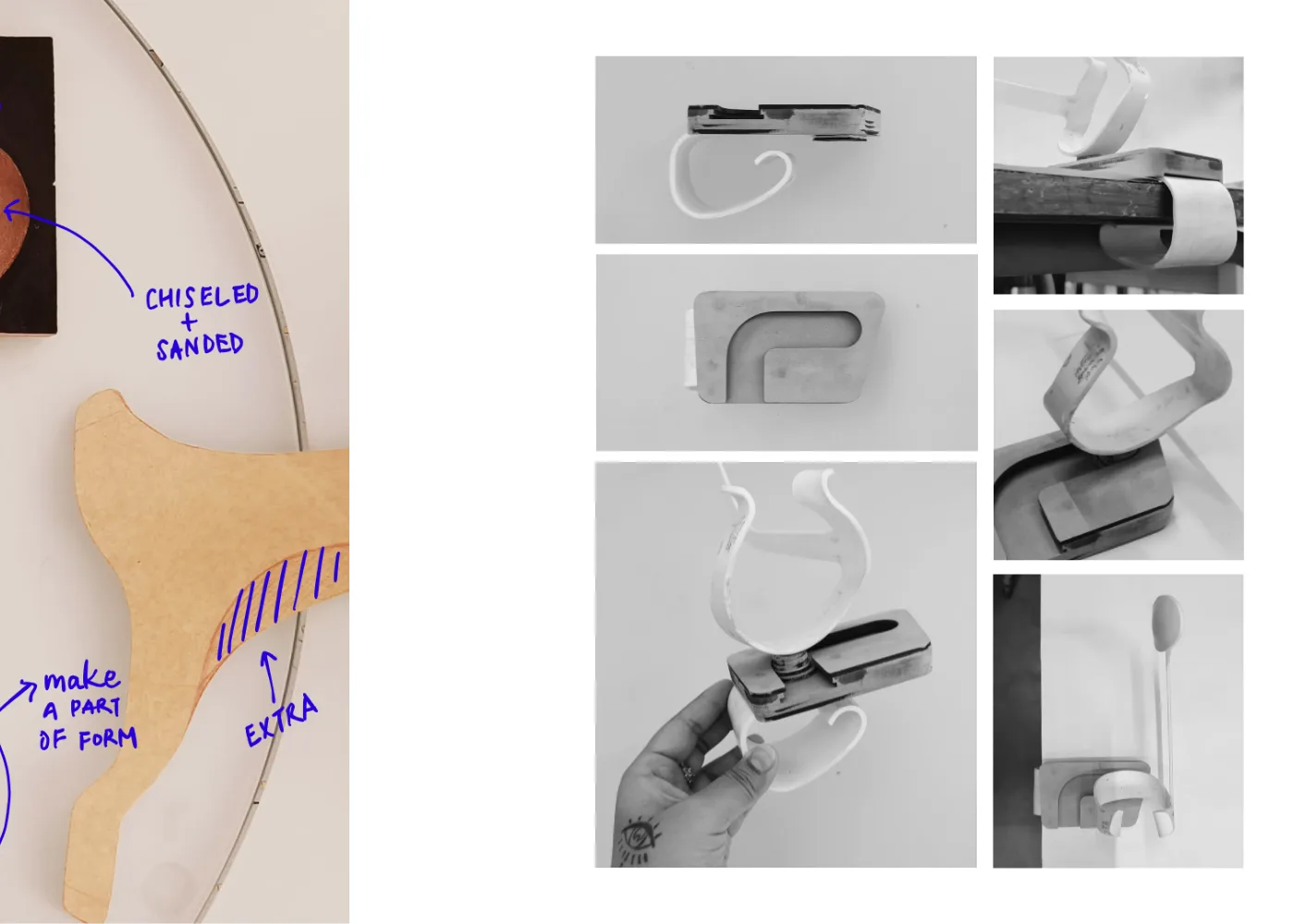
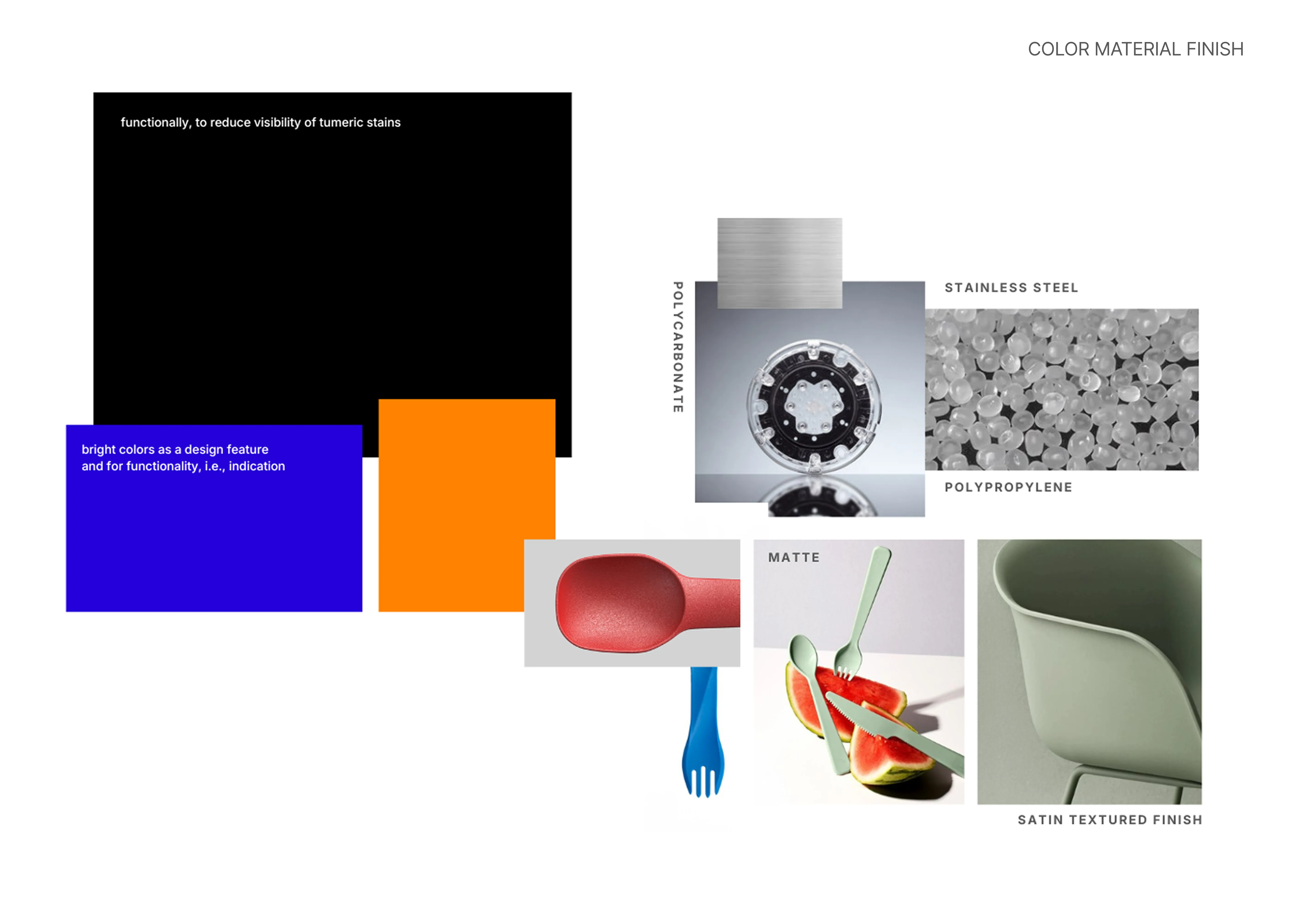
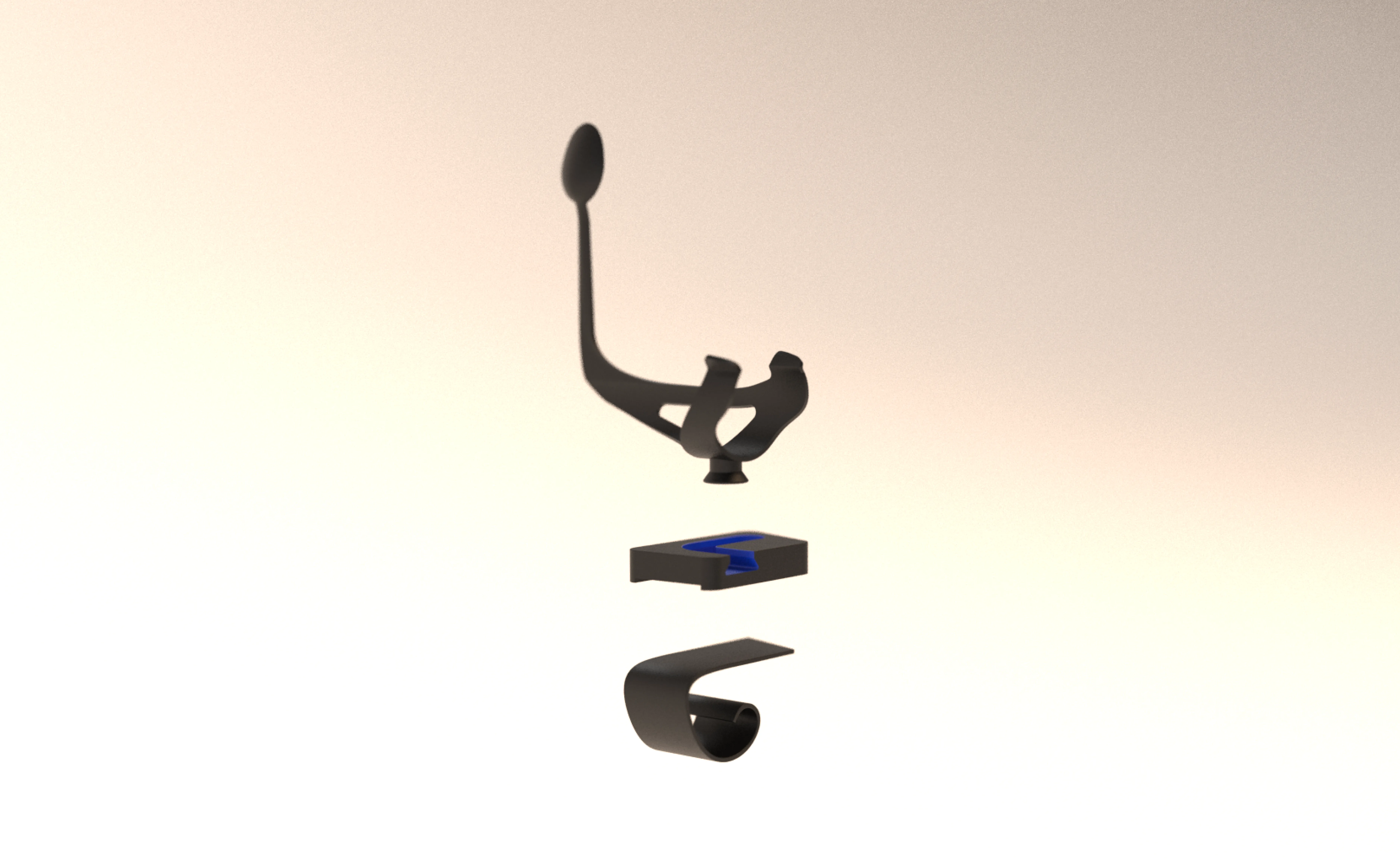
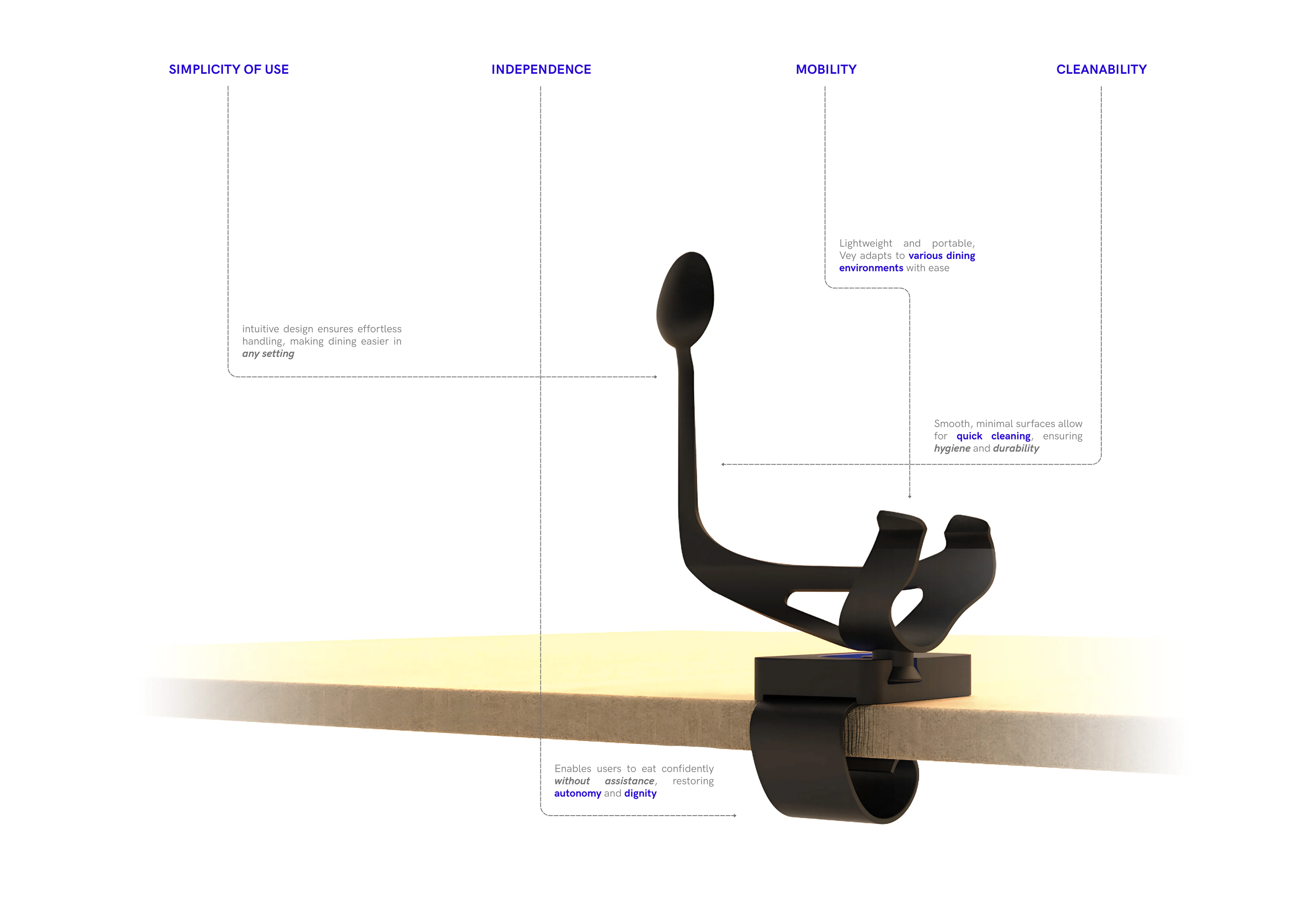
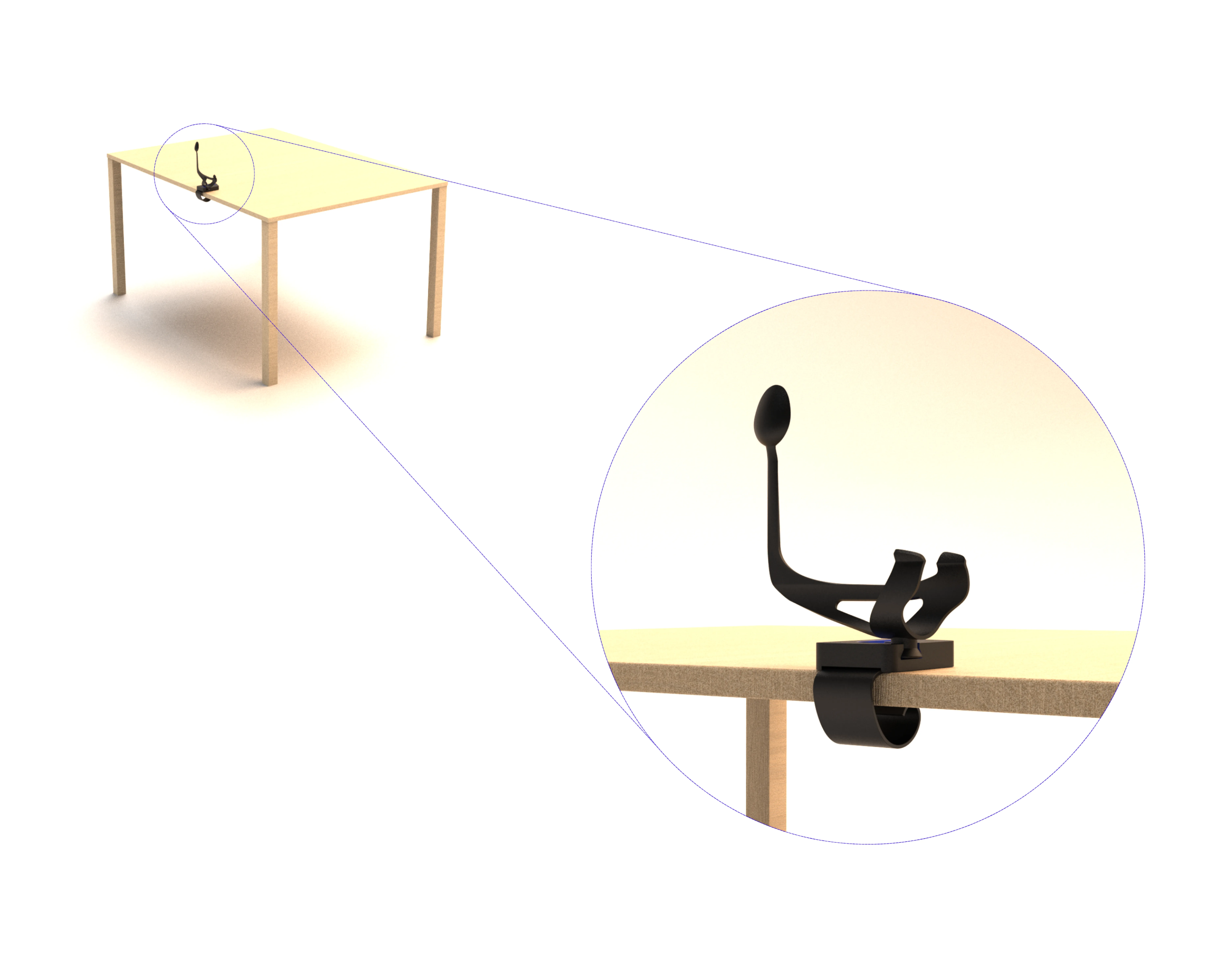
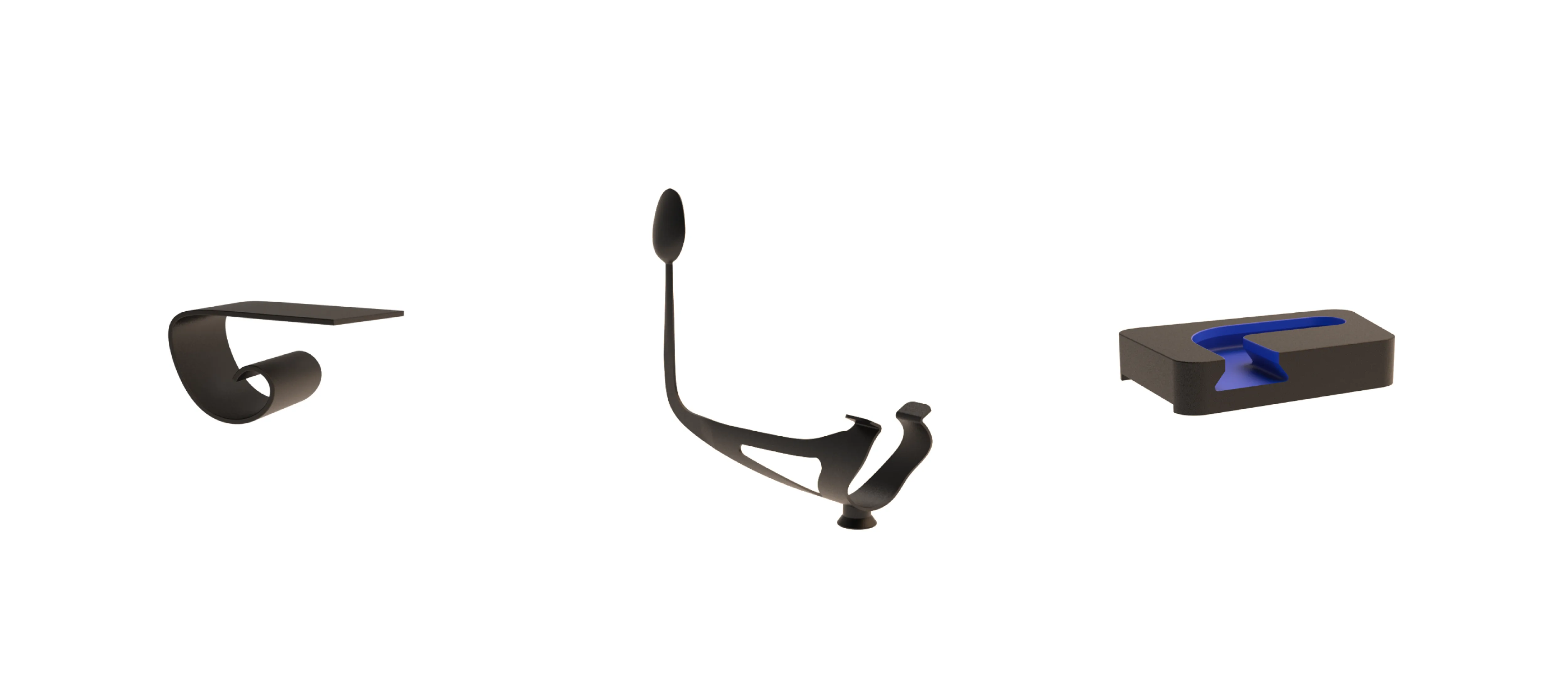
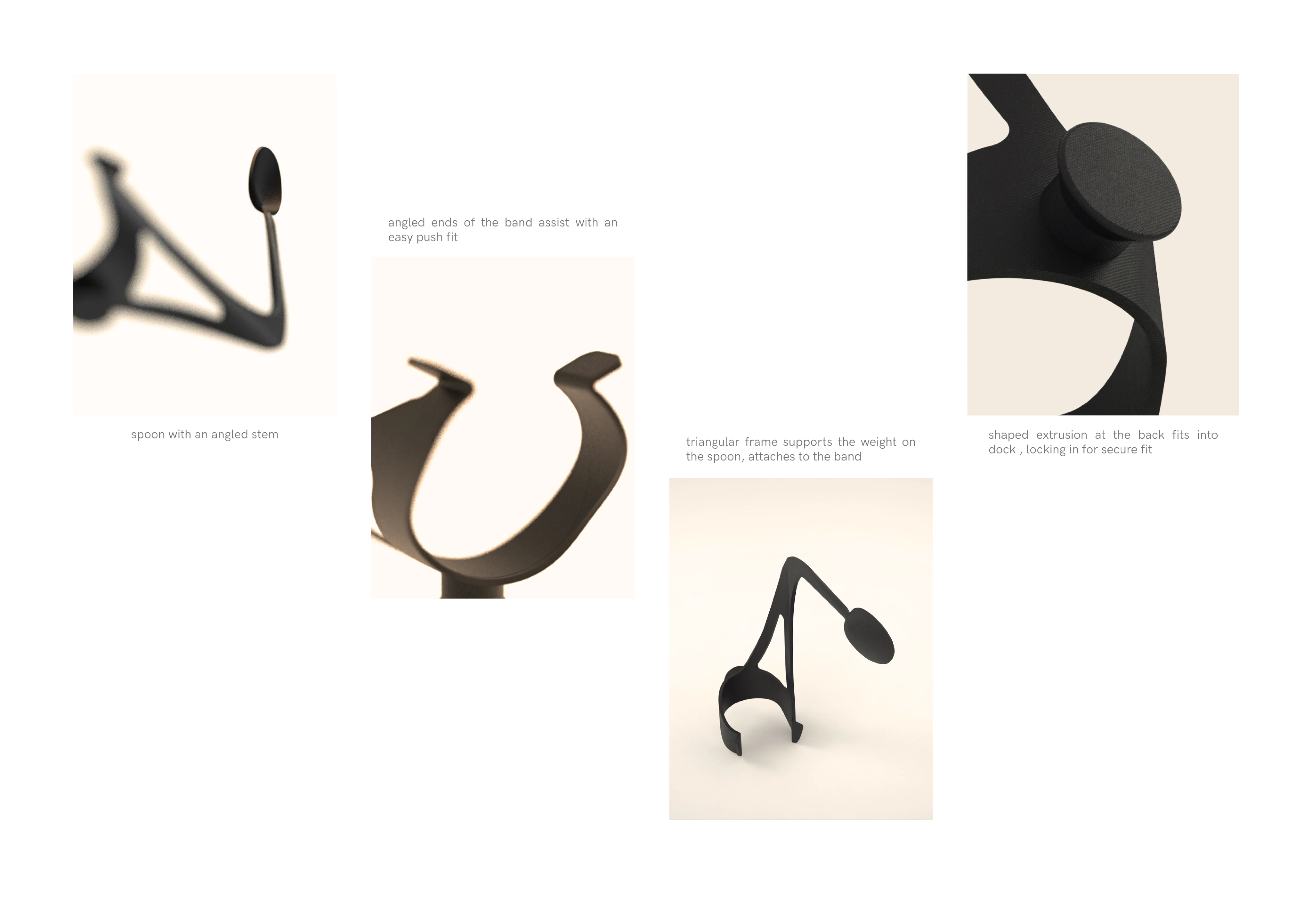
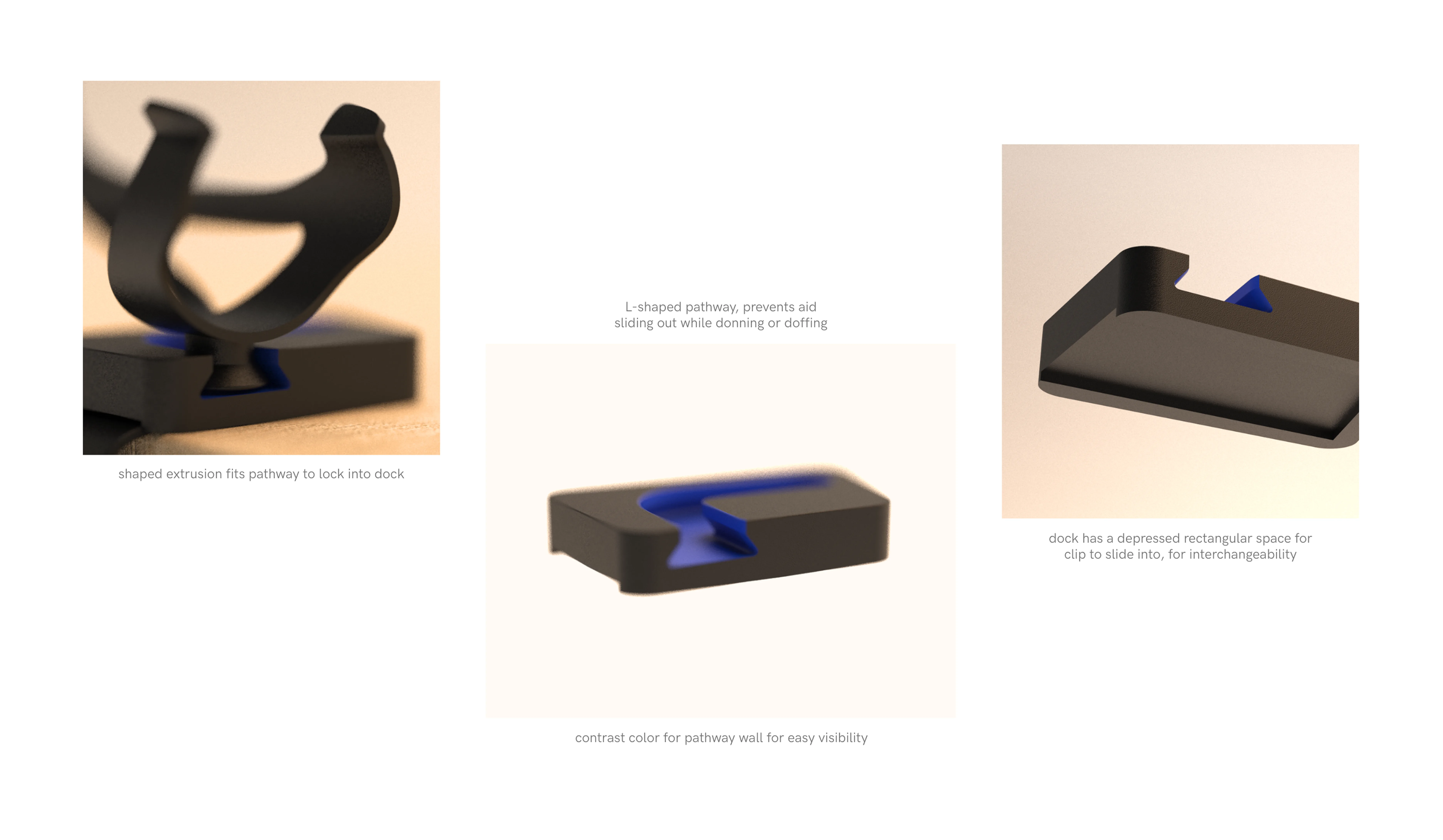
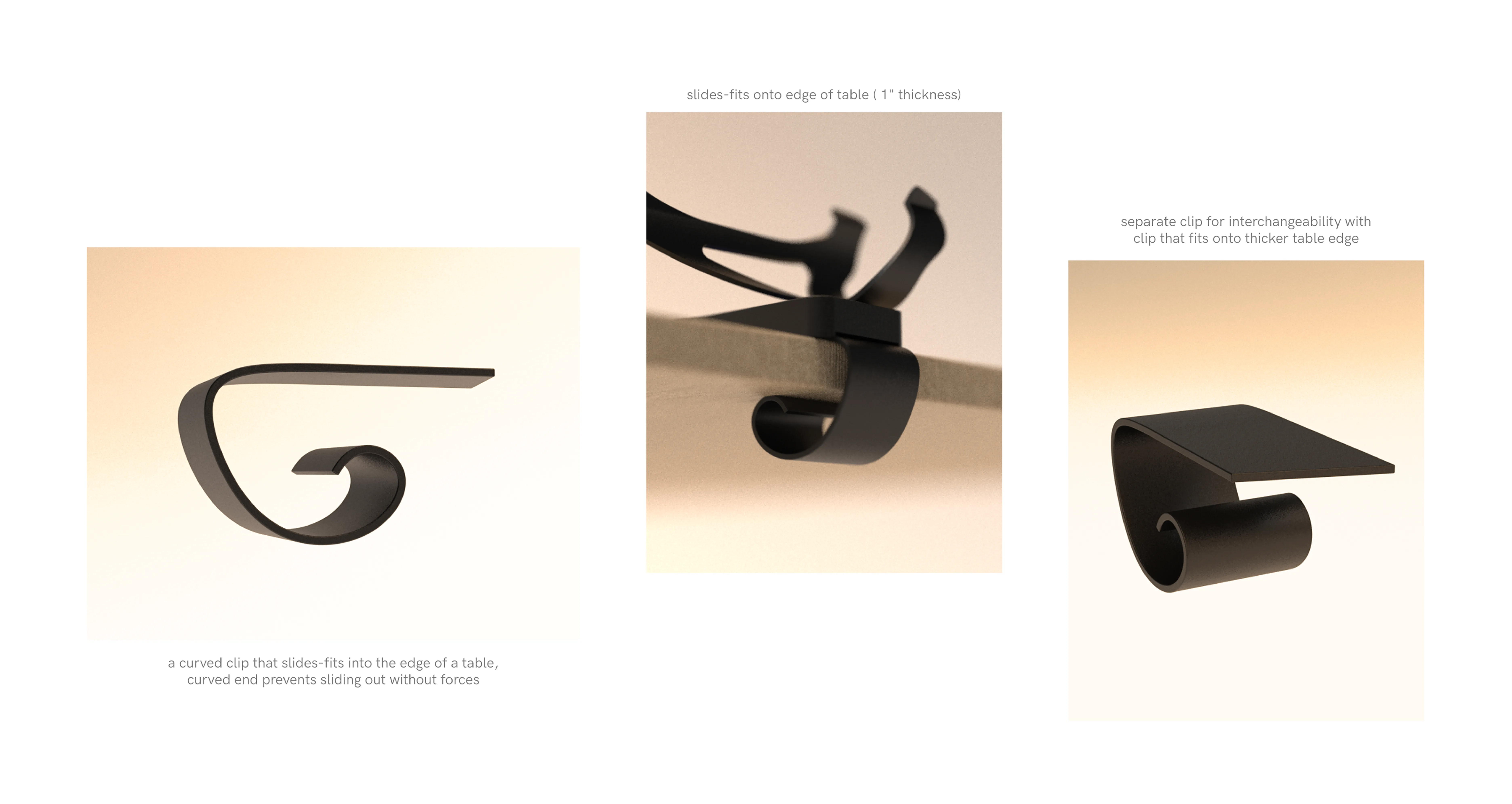
VEY translated behavioral, anthropometric, and cultural insights into a continuous-form assistive device built for self-donning, table-supported wearability, and practical scalability.
Each major design decision prioritized reducing friction while preserving autonomy.
Scroll to explore →
A simple assistive aid for independent eating
The final solution was a lightweight, self-donned assistive system designed specifically for transradial amputees navigating Indian eating contexts supporting dignity through simplicity rather than mechanical complexity.
Designing for adaptation changed the solution
VEY demonstrated that meaningful assistive design often begins not by replacing what is lost, but by understanding how people already adapt and designing systems that extend that intelligence.