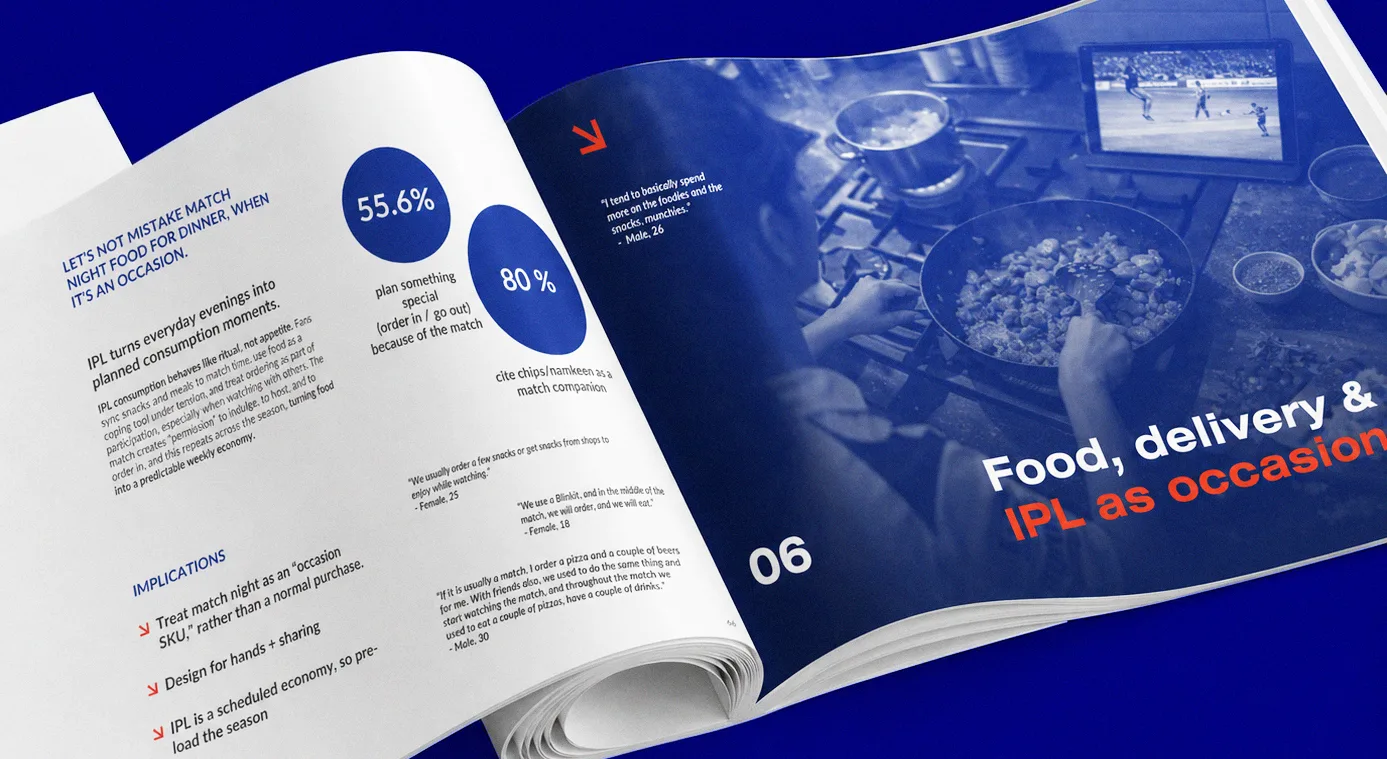
Designing a visual system for a 120-page marketing anthropology report decoding how India thinks, behaves, and reorganizes around IPL.
Making cultural research usable
Inside IPL examined how India's routines, emotions, and collective behaviors shift during the tournament. The design challenge wasn't the research, it was building a visual system capable of carrying it. One that marketers, strategists, and decision-makers could move through without losing the thread.
120 pages. Behavioral frameworks, emotional insight, cultural analysis. The work had to be deep and immediately readable at the same time.
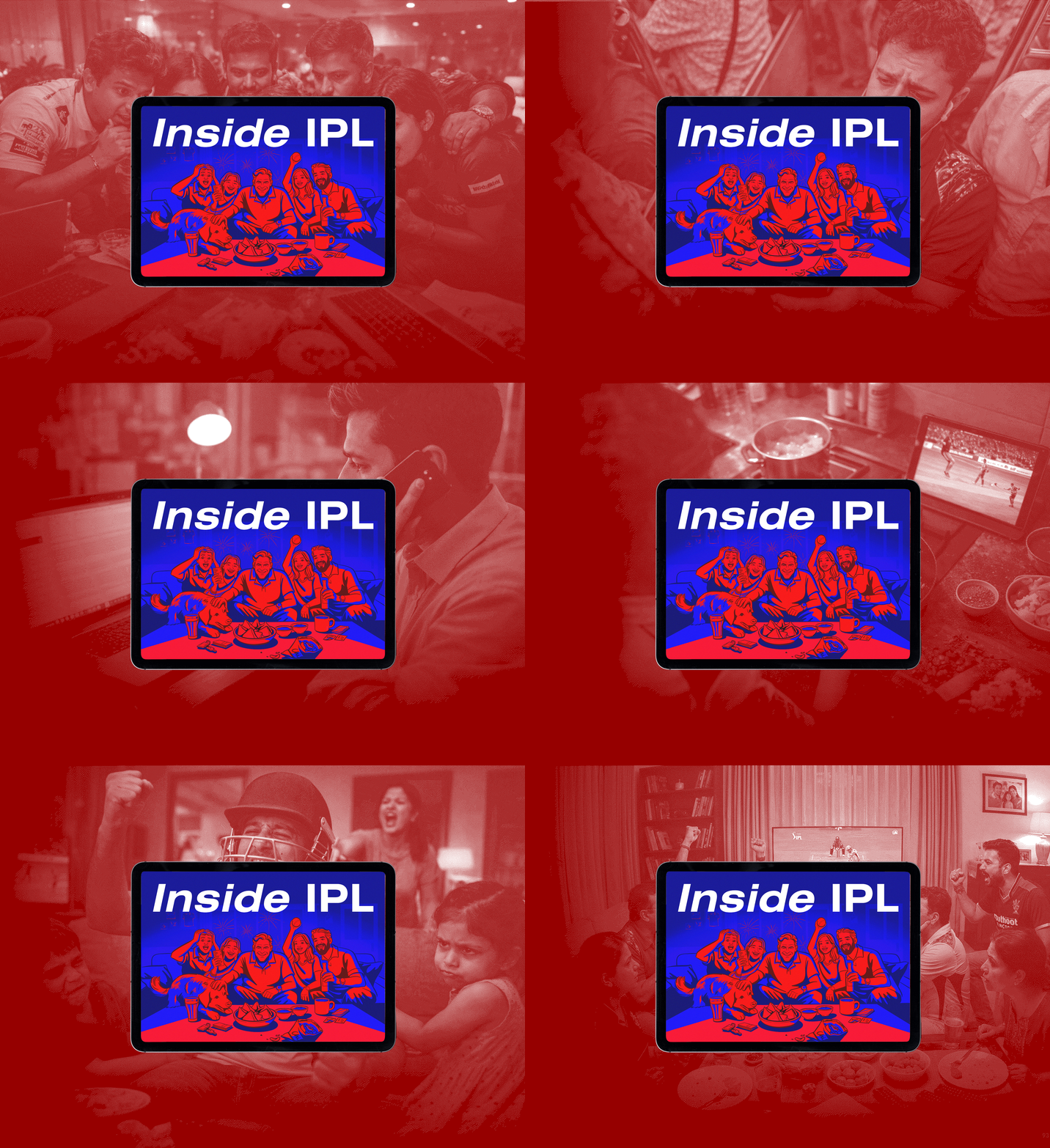
A language underneath the content
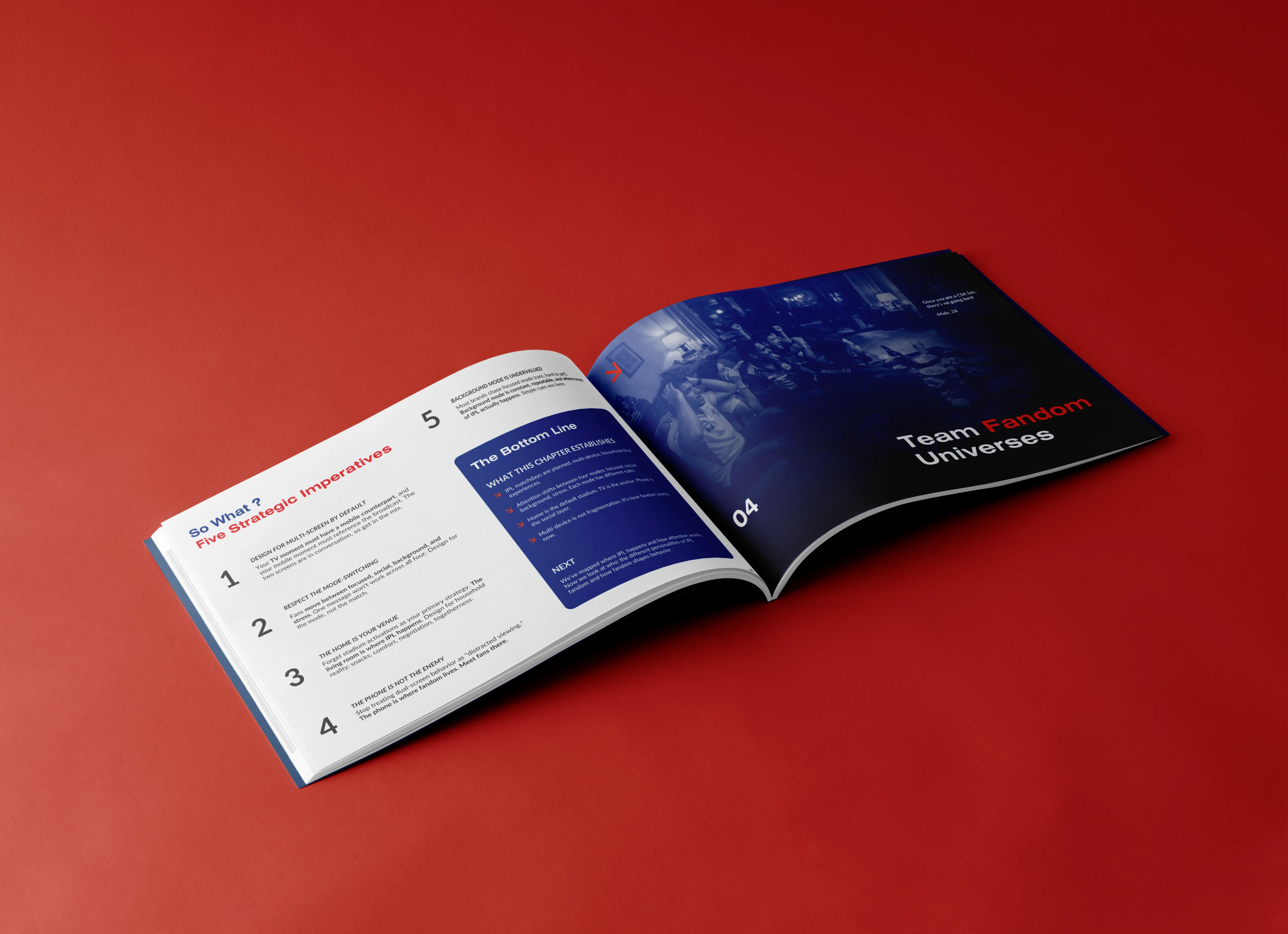
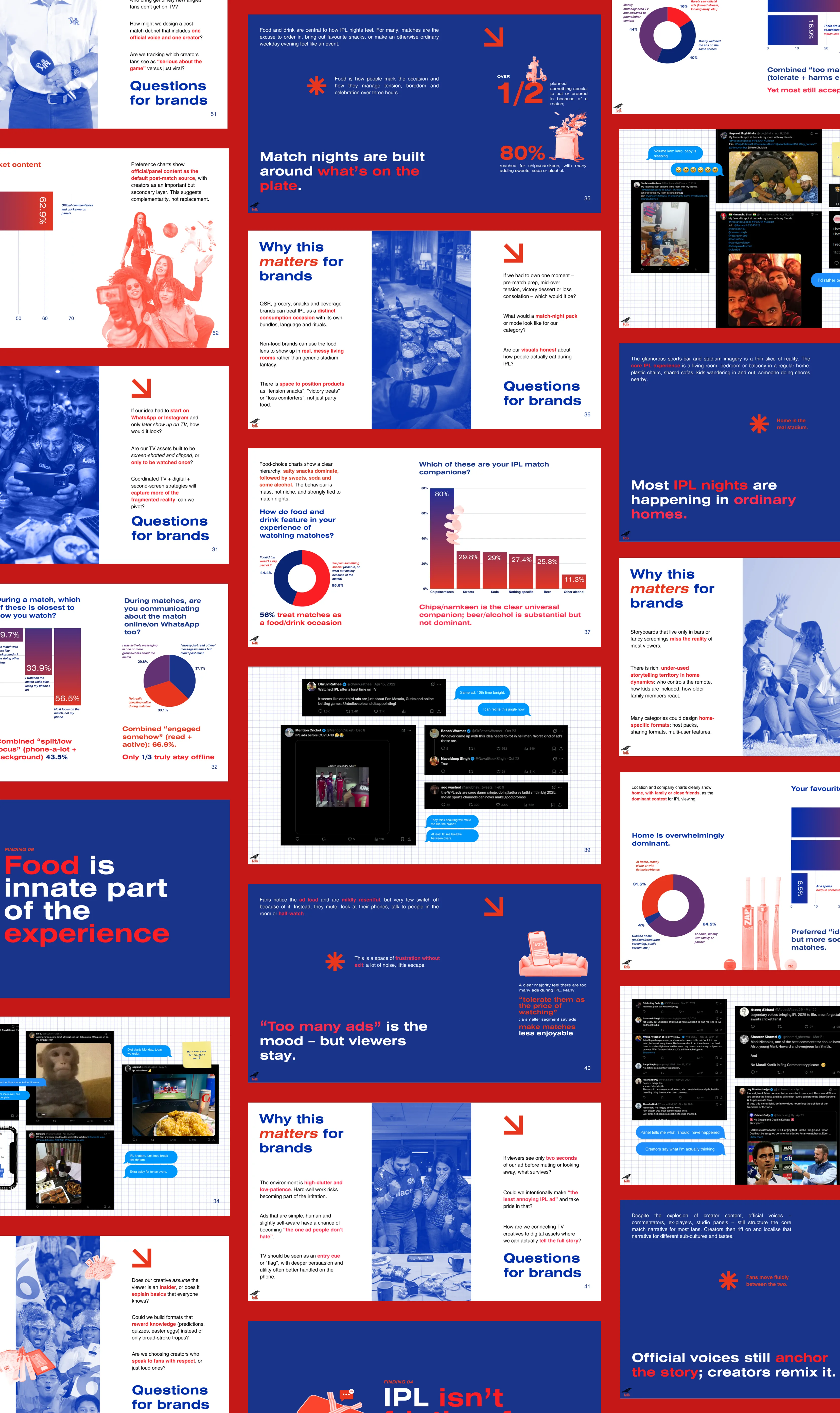
The real problem was coherence across content types. Research, frameworks, data, interviews, strategic implications, each form has its own demands. Typography was scaled up for a senior strategic audience. Layouts were designed for modularity. Color and image treatments were built not just to hold visual energy, but to travel across reports, decks, and broader communication assets.
No page was treated in isolation. The focus was on the system underneath: consistent enough to hold, flexible enough to adapt.
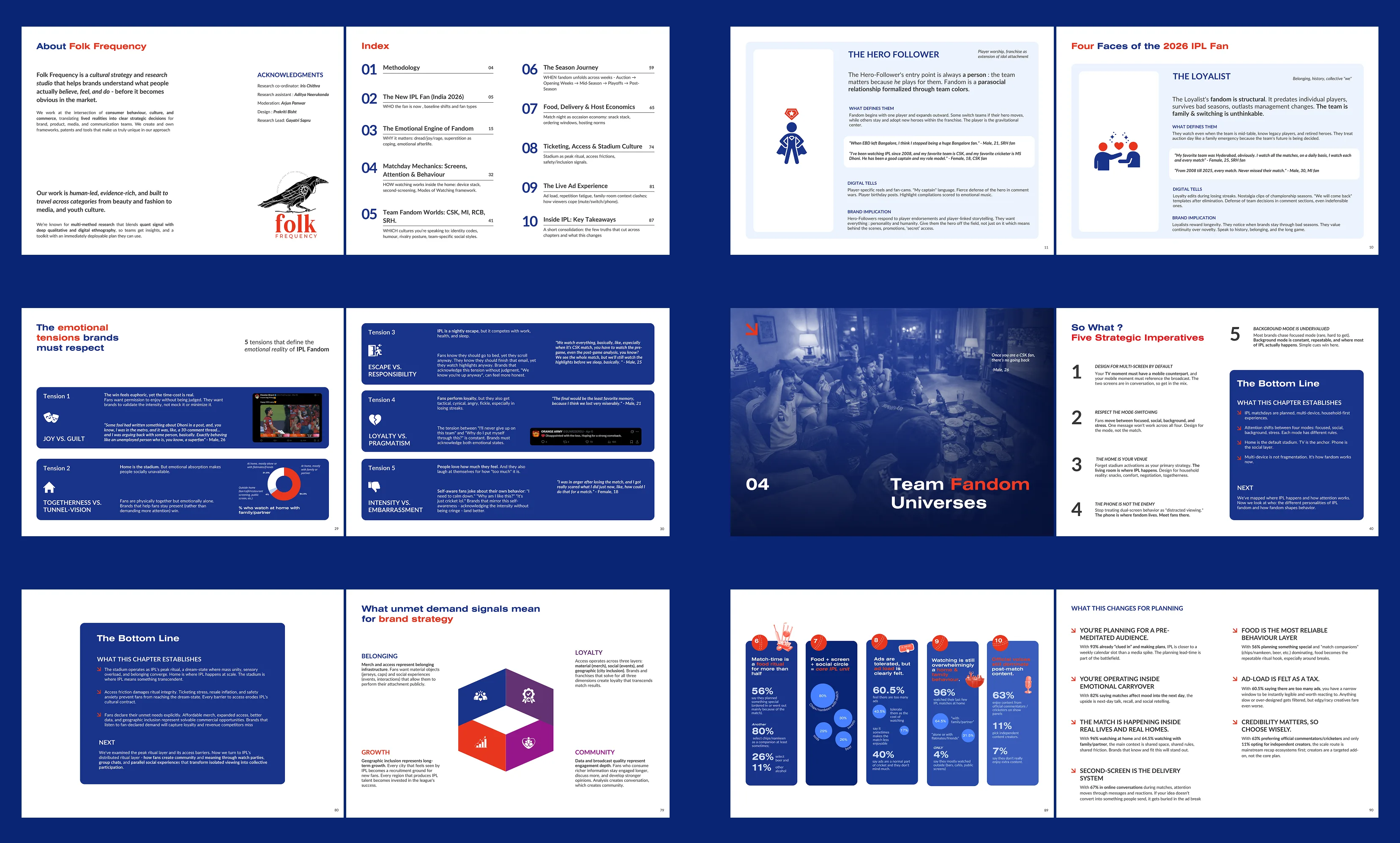
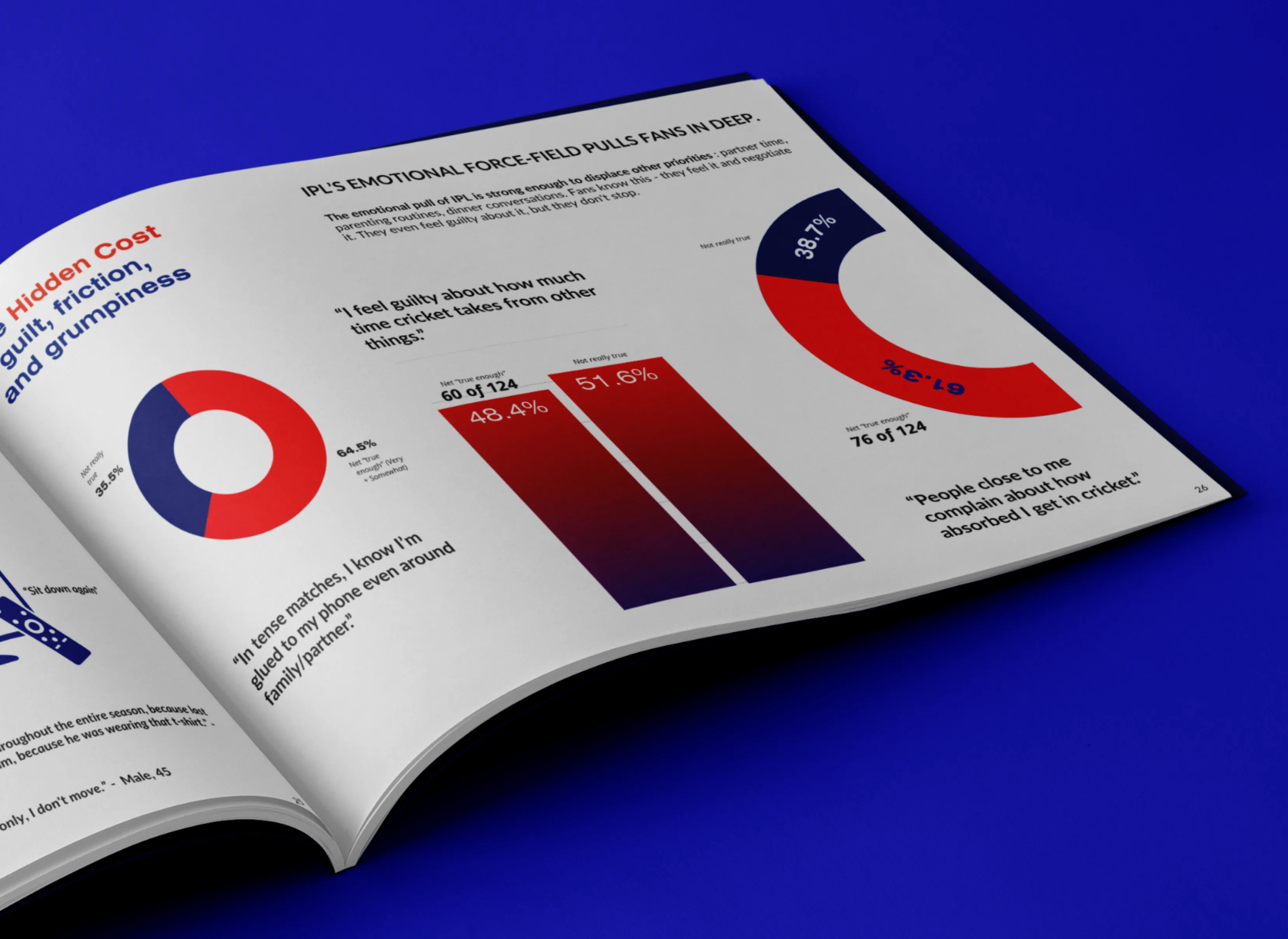
Insight that stays coherent in transit
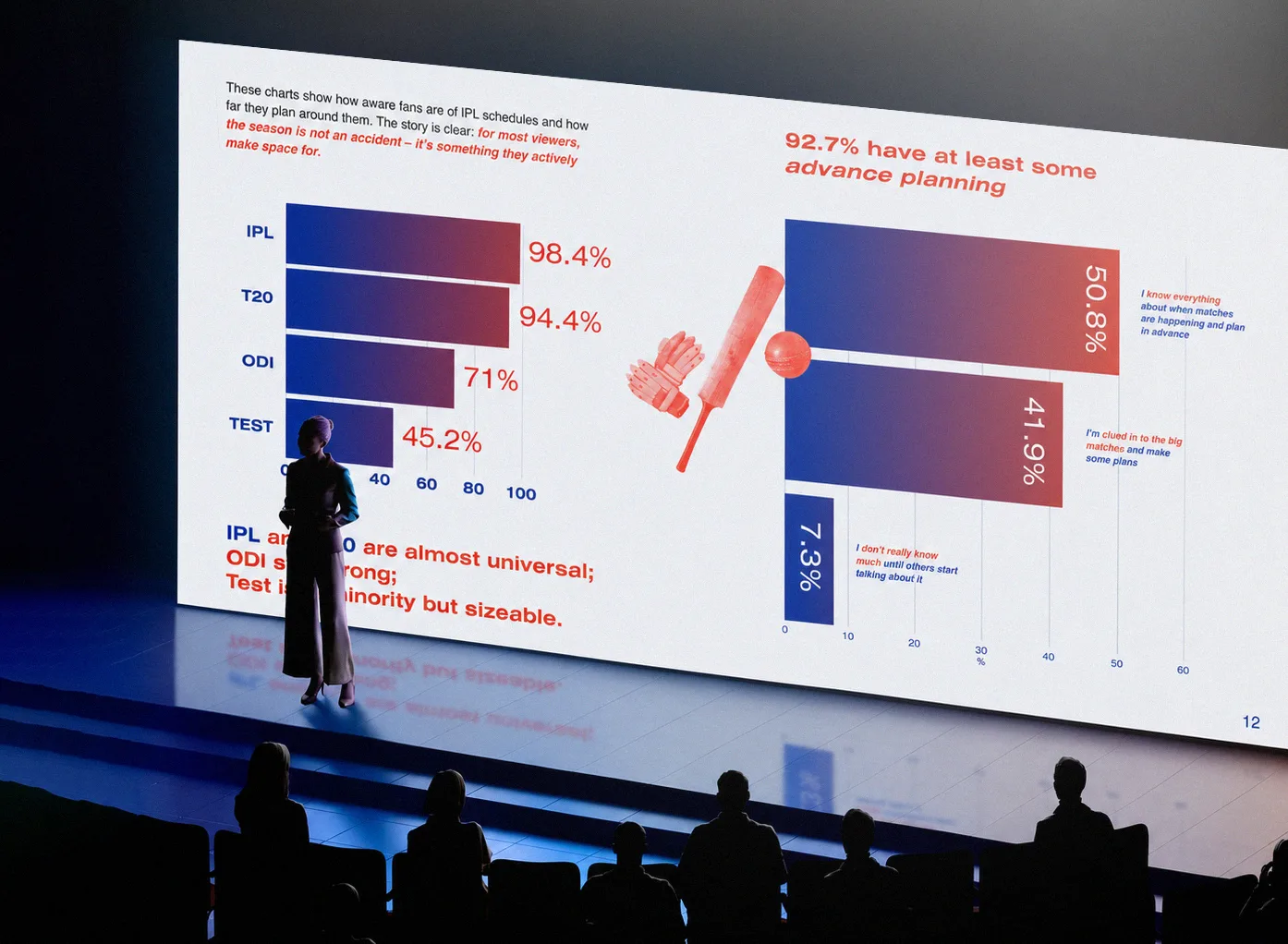
Inside IPL became less a document and more a communication ecosystem , one designed to let cultural research shift form without losing coherence. From research report to sales deck to marketing asset, the structure held without having to be rebuilt each time.
Describe your design solution here.
This project made something clearer: the hardest design problems aren't visual. They're structural. How do you build something that holds complexity without collapsing under it, and stays legible to someone who needs to act on it quickly?
The answer, here, was to stop designing pages and start designing the conditions for understanding. That's a different brief. And one I find myself returning to.